
A home emergency can leave a household needing several kinds of help at once. The scene may still be under a fire crew's control. People may need somewhere to sleep. Pets may need secure transport, temporary care or a veterinarian. These needs are related, but they do not all belong to the same service.
This guide describes roles in general. It cannot arrange help, send a responder or confirm that a place is available. Local arrangements differ. Knowing which task belongs where can make a conversation with the people on scene clearer, especially when a family is being passed from emergency response to temporary support.
Start with the people controlling the scene
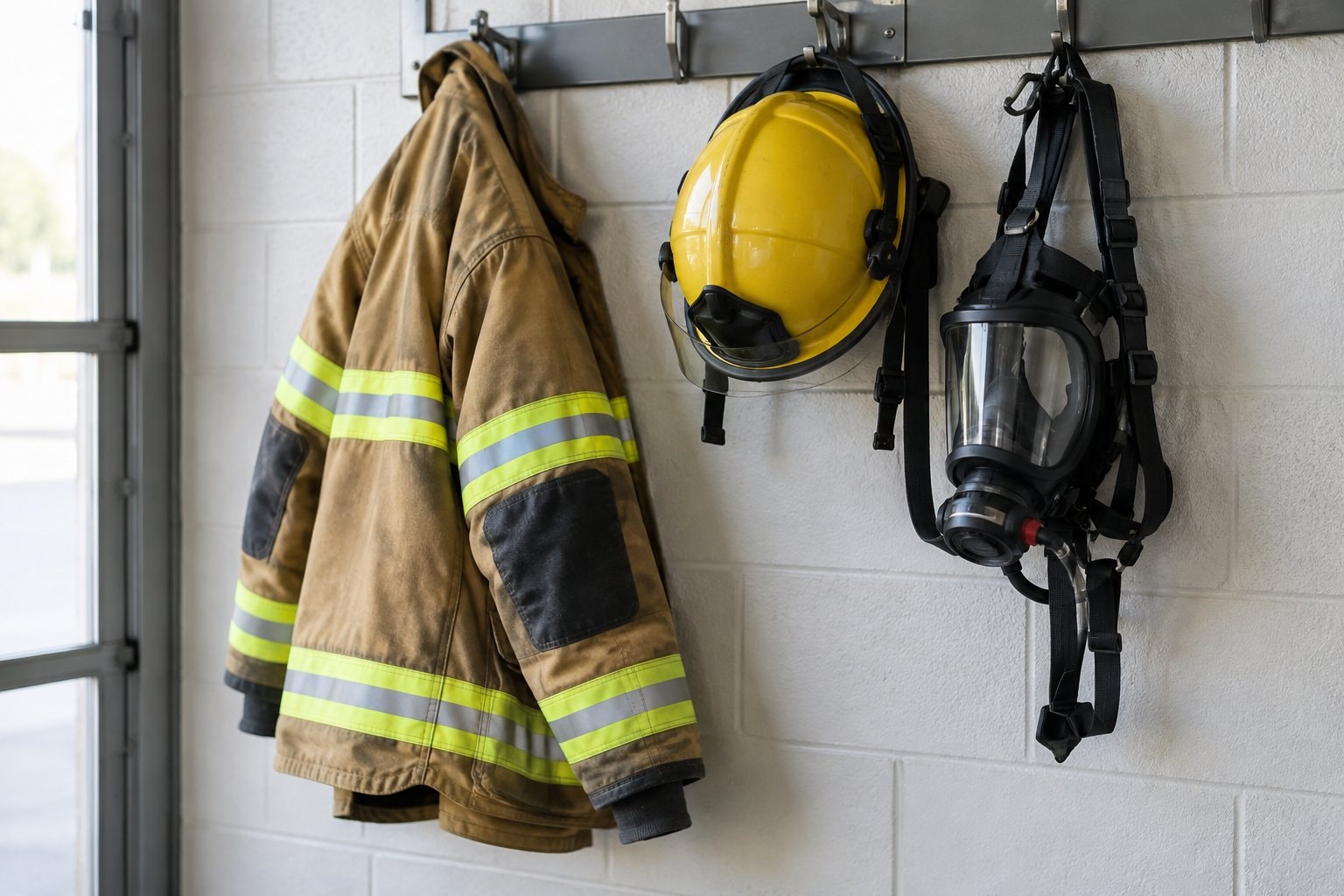
Firefighters handle the fire scene and decisions about access to the building. Household members can give them useful information about pets still inside: the kind of animal, its usual hiding places and the room where it was last seen. Being familiar with the home does not make it safe to re-enter.
People who have left the building stay outside. A missing pet is information to pass to firefighters, not a reason to go back. Keep animals already outside secured away from the busy scene. The first-hours guide after a house fire sets out the immediate priorities before longer arrangements are discussed.
A family may need to repeat its situation as responsibility changes. Separate what is known from what is uncertain. An animal seen outside is different from an animal assumed to be outside. A clear account of who has each pet matters when there are several people helping.
Household support and animal accommodation are different tasks
The American Red Cross describes Disaster Action Team volunteers as offering comfort and support to affected families, while duty officers coordinate responses remotely. These are examples of direct and behind-the-scenes work. They do not mean that the same volunteer personally handles every need involving an animal.
The Red Cross shelter guidance says service animals are always welcome and are not pets; workers do all they can to accommodate household pets when possible, but depending on the situation pets may need to stay at a different location. That distinction matters when a household is finding accommodation. Ask what arrangement is available for the actual animals involved rather than assuming they will share the family's sleeping space.
A place for the people and a place for the pets need to fit together. Consider how the household would reach the animals, who would provide their ordinary care and who holds their records. The guide to somewhere to stay with pets explains these practical questions without listing particular destinations.
Animal shelters and animal control have their own roles
Wikipedia's animal-shelter reference describes shelters as housing lost, stray, abandoned or surrendered animals and animal control as a municipal function that includes collecting stray dogs and cats. It also describes different admission arrangements. A local shelter's role and capacity need to be understood in context; the word shelter alone does not explain its emergency arrangements.
For a pet that is missing, information about where it was last seen and how it is identified can be important. For a pet needing temporary space, the question is different. A family needs to know whether the proposed arrangement is temporary care or a change in who is responsible for the animal.
Records can travel separately from a carrier unless someone keeps track of them. Make clear who has the pet, who has its papers and who knows the household's plan. A temporary move need not be viewed as a permanent decision simply because the family cannot return home immediately.
Rescue groups, foster homes and boarding
Rescue groups may work through foster households, through a facility or through a combination of settings. A foster network offers care in private homes rather than describing a single building. Such a network is not automatically an emergency boarding service. Its role, the animals it can care for and the arrangement it offers need to be established.
Boarding is another form of temporary care. A kennel may house dogs while their owners are away; other boarding settings accommodate cats or other animals. The practical questions include the kind of accommodation, the supplies needed and how the pet returns to the family. Availability cannot be inferred from a general description of the service.
Temporary care, surrender and adoption carry different expectations. Before an arrangement begins, the family and caregiver need the same understanding of its purpose. The page on pets that cannot go home explains those distinctions in a calm way. This site places no animals.
Veterinarians and trained community volunteers
A veterinarian is the person to discuss an animal's health with. Information passed along with the pet can include where it was during the emergency, what the household knows about smoke exposure and any existing care records. A temporary caregiver needs to know which professional is responsible for answering health questions.
Community emergency response teams are trained local volunteers who support professional emergency responders during wider disasters. Their work fits within a sponsoring agency's arrangements. This is another possible part of the local system, rather than an independent promise of pet rescue or a reason for untrained people to enter a damaged home.
A handoff works best when responsibility is clear
At each change, the people involved need a shared account of the next step. Where is the animal going? Who is accompanying it? Who has agreed to take responsibility there? What information will go with it? These questions describe continuity of care rather than a guarantee that every service can take over.
Keep the immediate task separate from the next decision. Getting away from the scene comes before settling accommodation. Temporary care comes before any discussion of a permanent home. Clear roles leave the family with a more understandable plan while the wider response continues around it.