
A cat may hide when the household needs to leave. The familiar call used for meals may not bring it into view during noise or change. Planning for that possibility means knowing its usual quiet places, having a carrier ready and keeping the household's route out clear.
During a fire, people leave and stay outside. A cat still inside is information for firefighters: where it was last seen and where it usually hides. No plan depends on going back into a burning or unsafe home. The preparation described here happens before an emergency, when there is time to make ordinary arrangements.
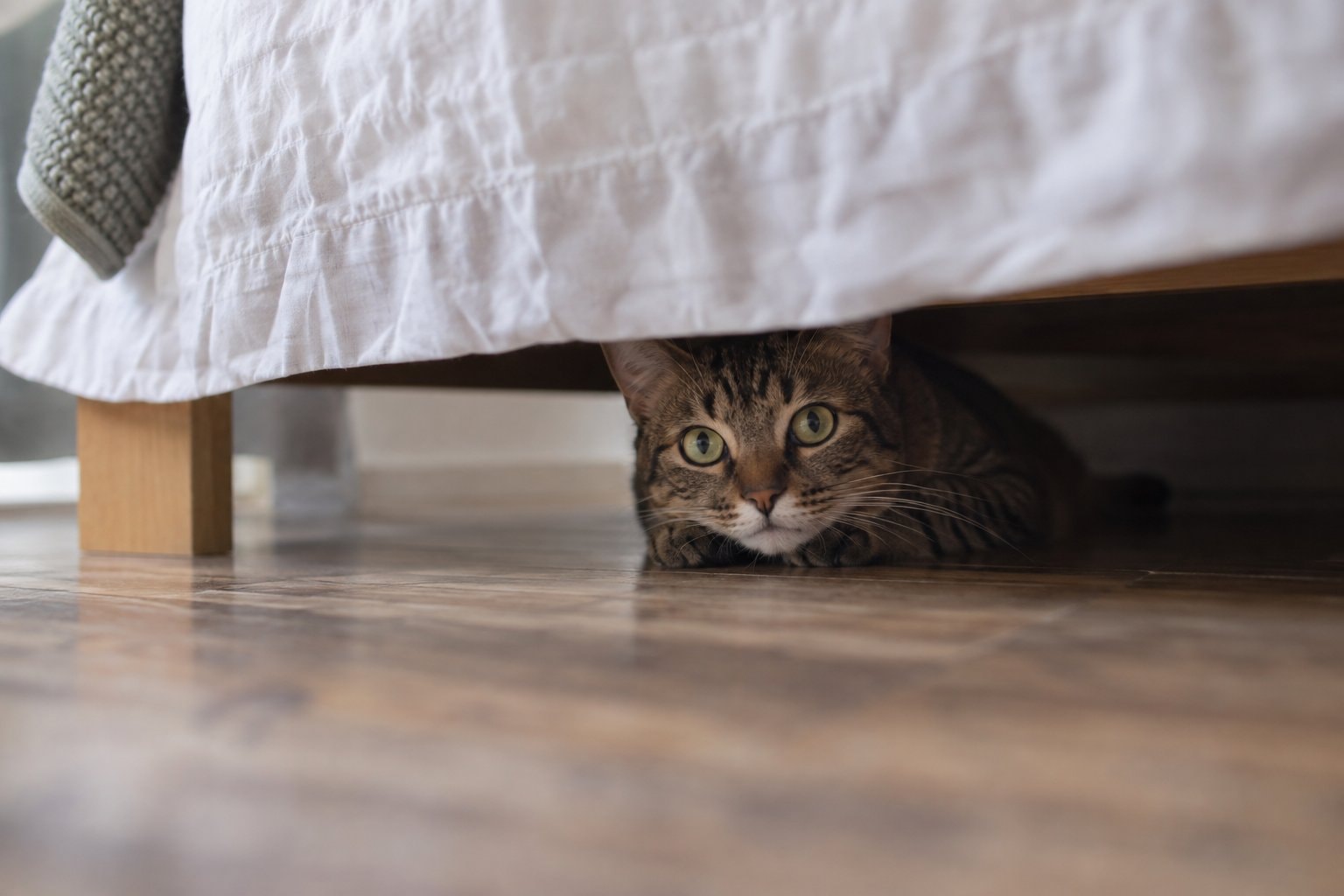
Know the quiet places before the alarm
Wikipedia's cat behaviour reference describes shy or anxious cats as sometimes preferring hiding places and quiet parts of the home. That makes a cat's ordinary habits relevant to emergency planning. Knowing those habits is different from assuming the animal will behave predictably when the surroundings change.
Notice which spaces a cat chooses when visitors arrive or a household appliance makes an unfamiliar sound. Under a bed, behind furniture or in a quiet cupboard can become a usual retreat. A short description of those places helps an adult who is less familiar with the home understand where the cat might be.
In ordinary circumstances, household storage can be arranged so that useful hiding spaces do not lead into inaccessible gaps. A cat can have a quiet place without disappearing into an area no one can reach safely. The aim is a manageable home layout, not removing every place the animal likes to rest.
Share this information with any adult responsible for the household in your absence. A pet plan is more useful when it is understood by the person actually there. Familiar hiding places can also be described to firefighters if the cat has not left with the family.
Let the carrier belong to everyday life
A carrier kept only in distant storage is easy to overlook in a hurried departure. Keeping it accessible gives the responsible adult less to locate. Check the door, latch and handle during ordinary use. Bedding that fits inside and space for the cat to rest are practical parts of making it ready.
A carrier can sit in a quiet part of the home outside travel days, with familiar bedding inside. It can become part of the room rather than an object that appears only when the household is leaving. This is preparation, not a guarantee that a cat will walk into it when an alarm sounds.
Adults can think through how the carrier moves from its place to the exit. Bags, shoes and stored belongings can make that route awkward. The pet emergency kit guide describes supplies kept ready to go. The carrier and kit need locations the responsible people know.
If the household has several animals, each needs a suitable transport arrangement. Avoid relying on loose movement from the door to a vehicle or expecting an unfamiliar person to hold a frightened cat. A secure carrier remains part of the arrangement once the animal is outside.
A decal and identification provide different information
The ASPCA's disaster preparedness guidance describes a visible rescue-alert sticker showing the types and number of pets in the home, marking the sticker when pets have left if time permits, current identification and a sturdy travel carrier. A decal informs responders about the household. Identification and a carrier address different parts of getting the animal away and keeping track of it.
The household can keep its animal information current as pets arrive, leave or change routine. An old note can create uncertainty. A note is not proof that a cat is still inside; an adult's account of what has actually happened is also needed. The priority during a fire remains leaving safely.
Clear pictures and identification records are useful if the household becomes separated from the animal. The guide to pet photos and identity explains that part of preparedness. Describe distinguishing features in plain terms. This page does not display individual animals or arrange searches.
Outside is a transition, not the end of the plan
Once outside, keep the carrier secure and away from the busiest part of the scene. Opening it to see whether the cat seems calmer can create another opportunity for it to leave. The next destination needs to be agreed before the animal is moved between people or settings.
When passing a cat to a temporary caregiver, pass along its ordinary routines and records as well. The caregiver needs to know what the household has agreed and which veterinarian answers health questions. A change in setting does not establish why an animal behaves differently.
When travel arrangements change, keep track of the carrier rather than assuming it has gone with the supplies. An adult can account for the animal at the departure and at the destination. The receiving person needs to know which carrier holds the household's cat and which records belong with it. Clear handoffs matter even when the journey itself is short.
Settle into temporary space with clear routines
The ASPCA's general cat-care reference describes a clean, dry resting place, clean water and a litter box in a quiet, accessible location. Those basics matter in a temporary room as well as at home. Individual health questions remain for a veterinarian.
A quiet room can give the household a manageable place to account for the cat. People coming and going need to know the door arrangement. New carers can learn where the animal rests without continually moving its bedding or drawing it out for visitors.
After a fire or move, keep the distinction between ordinary care and a veterinary question clear. Pass along what is known about the emergency and any change noticed afterwards. The guide to somewhere to stay with pets considers the setting around that care, including the possibility that the family and animal are accommodated separately.