
Summer gatherings bring unfamiliar sounds, open doors and cooking outside. A household's pet plan needs to account for all of them. The useful starting point is the setting, not the celebration: where will animals stay, who will manage the doors and how will the cooking area remain separate?
Make those arrangements before guests arrive. A pet that is comfortable with a quiet household may face a different situation when people come and go. Explain the plan to adults who are helping. Clear roles are more useful than assuming everyone will notice an open gate or recognise that a pet is trying to leave.
A quiet indoor place during fireworks
Wikipedia's fireworks reference describes how the noise can frighten domestic and wild animals and cause them to run away. A household can plan for that possibility without waiting to see whether its pets seem bothered. Think about a secure indoor space before nearby displays or unexpected noise begin.
Bring pets indoors and manage exits carefully. A quiet room away from the busiest doorway can make supervision simpler. Check windows, screens and door fastenings in ordinary conditions. Keep familiar bedding and the animal's normal care arrangements available. Ask a veterinarian about specific concerns rather than trying an unfamiliar approach at the last moment.
Keep visitors informed. A door opened to carry food or welcome a guest can become an exit for an animal. Tell adults which rooms and gates need to stay closed. If someone steps outside with a dog, make sure responsibility for that dog is clear rather than passed silently between people.
Do not take an animal close to fireworks to see how it responds. Do not make a child's enjoyment of a gathering depend on managing a frightened pet. Adults can organise the animal's space and the household's entrances. The guide to dogs, leashes and fear in emergencies discusses space around a dog when ordinary behaviour is less predictable.
Keep the grill area separate
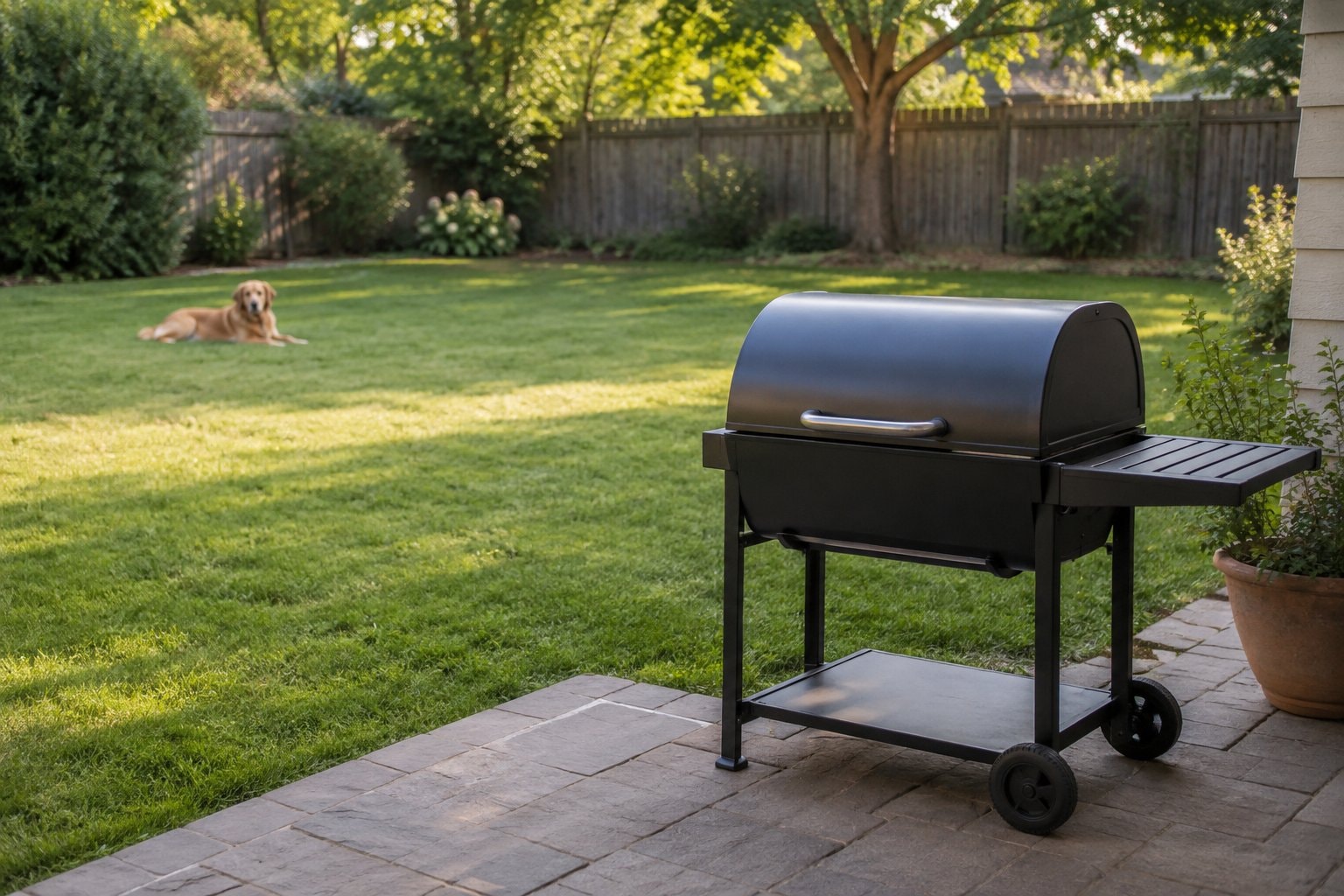
The U.S. Fire Administration's outdoor-fire guidance says to use barbecue grills outside, keep them away from siding and deck railings, and maintain a 3-foot safe zone around a grill for children and pets. Its guidance also says not to leave a lit grill unattended. Arrange the gathering around that space before cooking starts.
Pet space and cooking space need different boundaries. A leash tied beside the grill does not create a suitable place for a dog. A food table next to an animal's resting area can also draw activity toward the pet. Look at where people will walk, carry plates and open doors, then choose a calmer place for animals.
If a dog stays outdoors with an adult, agree who is supervising it throughout the gathering. Keep it away from cooking and from people carrying hot items. If that arrangement cannot be maintained, use the planned indoor space. Do not rely on a pet deciding to remain at a comfortable distance on its own.
When cooking is finished, the area still needs attention. Follow the grill's safety instructions and keep animals apart from the equipment and its contents. Do not allow the end of the meal to become the end of supervision. Guests leaving and household members clearing up can create another period of busy doors and gates.
Check identification before the busy period
A current tag, a clear photo and a current microchip registration help different parts of a search if a pet leaves the scene. Wikipedia's pet-microchip reference explains how an implanted chip's identification number is read by a scanner and connected to information in a registry. The chip needs to be scanned and linked to useful records.
Review those records before a planned gathering. A household move or a changed telephone number can leave an old registration less useful than expected. Check the details through the relevant registration service. Do not assume that having a chip means someone can locate an animal's movements from a distance.
Keep a recent photo that shows the pet's face and distinctive markings. Keep a photo with a household adult as well. A paper copy can be useful alongside the digital file. The guide to pictures of pets and their people explains why identification information belongs with emergency supplies, rather than scattered between devices and drawers.
If a pet slips away
Start with clear information. Note the last place the animal was seen and the direction it went. Tell the local animal shelter or animal control about the separation. Share an accurate description and the current identification details. If emergency responders are already managing a scene, tell them rather than entering a restricted area.
Keep children with an adult and away from roads or a noisy search. Do not ask visitors to chase an animal through traffic. A frightened pet and a group of people moving quickly can become hard to manage. Explain the animal's ordinary response to strangers when asking for help.
Do not re-enter a building if there is a fire. Get people out, call 911 and tell firefighters about pets that are still inside. The fact that a gathering was relaxed moments earlier does not change those priorities. The guide to the first hours after a house fire puts the immediate household decisions in order.
Keep the plan useful after guests leave
A quiet end to a gathering is a good time to check that pets, carriers and the usual care supplies are where expected. Make sure gates and doors are closed and that temporary arrangements have been explained to any adult staying overnight. If a pet has been exposed to smoke or seems unwell, ask a veterinarian.
Summer preparation can be modest: a clear indoor space, a separate cooking area, current identification and an adult who knows the plan. Those details belong to ordinary household care. This site runs no gathering and provides no animal-handling service; it is a reference for thinking through the arrangements that people responsible for pets will need to make.