
As rooms become cooler, a household may start using equipment that has been idle. A heater moves into the living space, a fireplace is used again or candles appear near seasonal decorations. Pets may also change where they rest. Reviewing those arrangements together makes more sense than checking the equipment while overlooking the animals around it.
Walk through the rooms in ordinary conditions. Notice where blankets, bedding and curtains sit in relation to heat sources. Look at the routes animals use to reach a door or a usual resting place. The aim is a clear arrangement that the whole household understands, including anyone helping with pet care.
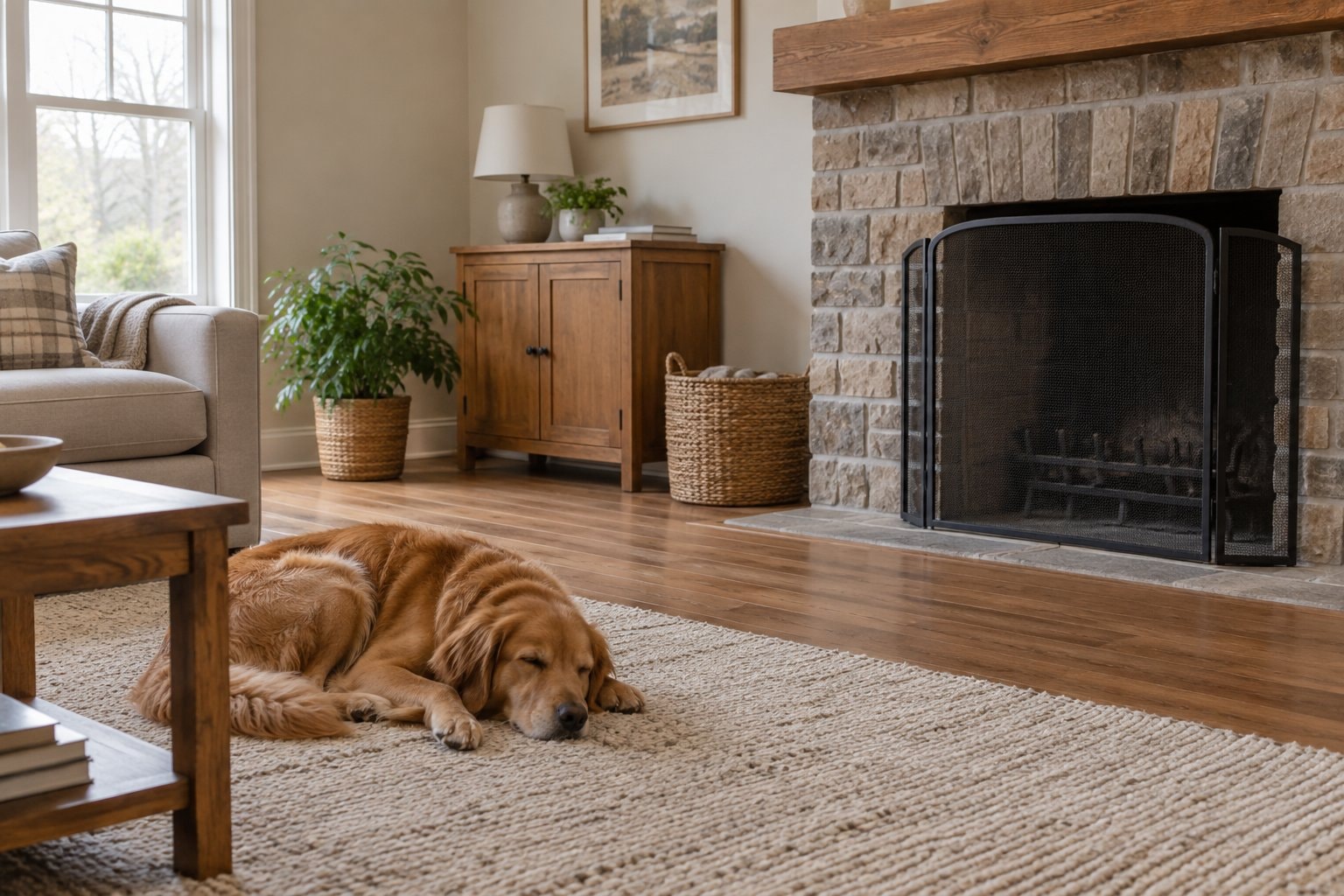
Make clear space part of the room
The U.S. Fire Administration's heating guidance says to keep anything that can burn at least 3 feet from heat sources, turn space heaters off when leaving the room or going to bed, and have heating equipment and chimneys cleaned and inspected each year by a professional. Its guidance also says never to use an oven to heat a home.
Think about what moves into that space during a normal evening. A blanket left on a chair, a pet bed pulled nearer to a person or laundry waiting to be put away can alter the arrangement. Clear space needs to remain clear while the room is being used, not just when a heater is first placed there.
Give pets a resting area apart from heating equipment. A comfortable place elsewhere in the room is easier to manage than repeatedly moving an animal away from a heater. Tell household adults where that space is and why it belongs there. Keep exits clear so a person holding a carrier is not navigating around newly placed furniture.
Pet movement changes the hazard check
A county fire and rescue service's pet-safety sheet advises keeping pets apart from candles, lamps and space heaters, using a fireplace screen and watching for chewed electrical cords. It also identifies battery-operated flameless candles as an alternative to open flames. Those subjects belong in the same room-by-room review.
A dog passing a small table or a cat moving along a mantel can reach places that are easy for an adult to overlook. Consider the equipment's position and the route an animal takes. Do not rely on a pet understanding why a new object has appeared in a familiar room. Arrange the space so routine movement stays apart from the hazard.
Look at cables too. Notice cords running beneath rugs, around pet bedding or along a usual path. If equipment or wiring seems damaged, ask a qualified professional about it. Do not make changes based on a quick guess. Keep the animal away from the problem while the household decides how it will be assessed.
A fireplace screen is part of a wider boundary
A screen does not turn the area immediately around a fireplace into a pet resting place. Keep the planned pet-free space around it and pay attention when an adult adds fuel or manages the fireplace. A household member carrying supplies can be distracted by an animal crossing the same route.
Explain the arrangement to visitors and to people who care for pets when the household is away. Familiarity with the animal does not mean familiarity with the room's heating setup. Keep the instructions short: where the pet rests, which area remains clear and which equipment must be left alone.
The surrounding space matters after the visible fire is gone too. Do not move bedding or allow an animal close to equipment simply because the room seems quieter. Follow the fireplace's ordinary safety instructions and ask a professional about uncertainties. A general guide cannot tell whether a particular surface is cool or a particular installation is sound.
Use reminders without guessing alarm schedules
The U.S. Fire Administration's smoke-alarm guidance calls for monthly tests and for following the manufacturer's instructions when replacing alarms and their power sources. It recommends alarms inside and outside sleeping areas and on every home level. Familiarity with the actual alarms matters more than assuming they are all the same.
If seasonal clock changes are already a household reminder, use that moment to review the alarm instructions and the escape plan. It does not replace the testing schedule for the installed equipment. Make sure every adult knows where the instructions are kept and how a warning fits into the household leaving plan.
Check the routes used with pets as well. A crate tucked behind stored blankets or an exit narrowed by winter belongings may be less accessible than before. The alarm and escape-plan guide explains how those ordinary changes fit into planning for a home with animals.
Keep the kit and care plan accessible
Heating season can bring a household review of practical supplies. Check that carriers close securely, that the leash remains near the planned exit and that the relevant records are available. The pet emergency-kit guide describes a place for food, bowls, bedding and clear care information, without turning preparation into a shopping list.
Think about a place to stay if the home cannot be used. Ask what an animal would need there and who could help with ordinary care. Cold weather does not change the need to leave an unsafe building. In a fire, get everyone out, call 911 and tell firefighters about any pets that remain inside.
Carbon monoxide warnings belong in the same household conversation as heating and outages. The gas and carbon monoxide guide explains the distinction between the warnings and the need to get out. It cannot replace the people assessing an actual emergency, or a veterinarian assessing an exposed animal.
A useful seasonal review ends with clear responsibility. Adults know where pets will rest, how equipment is used and what the leaving plan requires. Keep the arrangements easy to explain, especially when a room has changed. Preparation is most practical when it remains part of normal household care throughout the season.