
A dog that usually follows a familiar routine may face noise, open doors and strangers during an emergency. Planning around those conditions is more useful than assuming that ordinary obedience will carry over. The aim is simple: leave safely, keep the dog with a responsible adult and have somewhere suitable to go.
Start with the dog's normal day. Note where the dog sleeps, which door is usually used and where the leash is kept. Think about who is home at different times. A plan that depends on an absent person needs another arrangement. Keep it short enough that another adult can understand it without a long explanation.
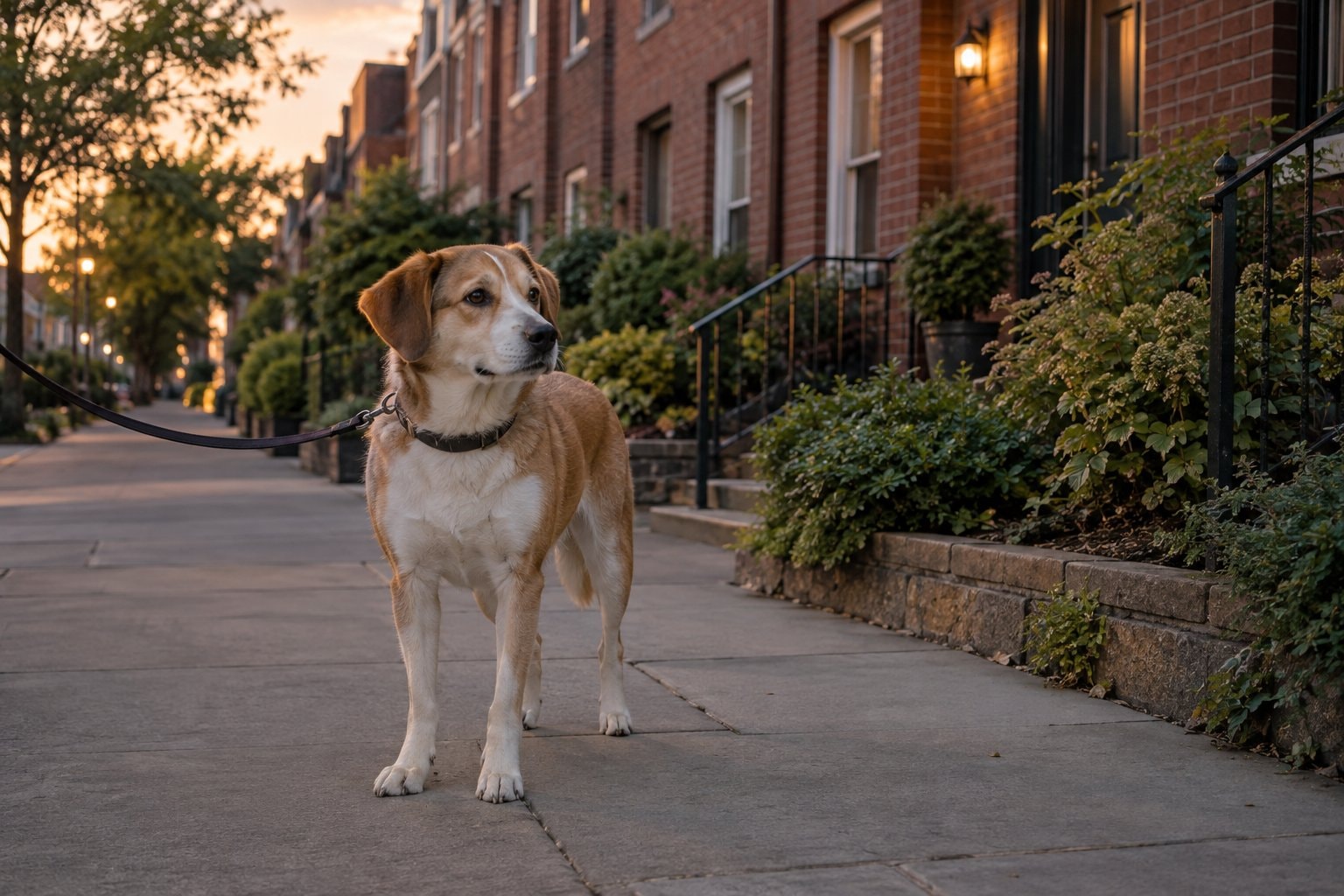
Keep the exit equipment within reach
A leash and a suitable harness or collar belong somewhere easy to reach on the way out. That might be a hook near the usual exit, away from clutter. Equipment kept in a drawer behind household supplies is harder to locate under pressure. Check that the person likely to use it knows which pieces belong together.
Consider the route as well as the equipment. A narrow hallway, a gate that needs a key or a door that swings into the space where a dog waits can complicate leaving. Deal with those details during ordinary planning. The household escape-plan guide explains how people and pets fit into the same plan.
Being ready does not mean stopping to collect everything during a fire. Get everyone out and call 911. Do not go back into a building for a dog, a leash or a crate. Tell firefighters where the dog may be and describe the animal without assuming they have already been told.
A crate can be a familiar place
A travel crate is easier to include in a plan when it is familiar before an emergency. Keep an appropriate crate available rather than buried behind seasonal belongings. Check that its door closes securely and that another adult can handle the fastening. Think about how it will fit into the vehicle normally used by the household.
Outside the home, a quiet resting place matters too. The ASPCA's general dog-care guidance describes a quiet place with clean bedding, identifies a crate or dog bed as possible resting places and advises keeping a dog on a leash outside an enclosed area. That is a useful starting point when familiar routines have been interrupted.
Do not assume every dog will enter the same sort of enclosure willingly. Discuss transport needs with a veterinarian or an experienced animal-care professional before a crisis. A large dog, a dog with limited movement and a dog unused to travel may need different arrangements. The plan can record those needs without turning them into an improvised handling lesson.
Give a frightened dog room
A busy scene is not a suitable place for greetings. Ask people to stand back. Keep children with an adult and apart from an unfamiliar or frightened dog. Avoid a ring of people leaning over the animal or reaching toward it. A dog does not need to meet everyone who wants to help.
Read behaviour cautiously. Wikipedia's dog-bite reference explains that a wagging tail can accompany fear, insecurity or a warning as well as friendly behaviour. A familiar signal on its own does not establish that an approach is safe. Give the person responsible for the dog space to manage the situation.
When help is needed with an animal that cannot be handled safely, tell the fire department on scene or the relevant animal-care service. Do not make a child responsible for catching a loose dog. Do not ask a bystander to chase it toward roads or crowds. Share useful information about its usual response to strangers and where it last went.
A bite that breaks the skin needs medical attention; MedlinePlus provides general information about animal bites and seeking medical care.
Keep identification useful
A collar tag and a microchip serve different parts of finding a missing dog. Keep the information associated with them current. A household move, a changed telephone number or an old registration account can make a familiar item less useful than it appears. The goal is information that someone can use if the dog is found.
Keep a clear photo with the dog's records. Include markings that distinguish similar-looking dogs, and keep a picture showing the dog with a household adult. Make a paper copy as well as keeping a digital file. The guide to photos and pet identification explains how those records fit together.
If a dog is missing, note where it was last seen and the direction it went. Tell the local animal shelter or animal control about the separation. Describe its size, coat, markings and any identification. Keep the account clear and factual. Do not enter an unsafe building or cross emergency barriers to look for it.
Plan for the place after the exit
Leaving home is only part of the arrangement. Think about a friend or relative, temporary accommodation or a boarding setting that could accept the dog. Check the actual conditions rather than relying on a general description of a place as welcoming to pets. Ask about the animal's needs and the household members who would be staying.
Pack ordinary essentials where they can be collected safely during an evacuation with time to prepare. Food, a water bowl, bedding and care records help the next caregiver understand the dog's routine. Keep the notes readable. If another person takes responsibility for the dog, agree who is providing care and how updates will pass between adults.
After the move, keep the arrangement as steady as circumstances allow. Explain the dog's usual routine to the person caring for it, and ask a veterinarian about exposure to smoke or any change that causes concern. This guide cannot handle an animal or arrange care. It can help a household put those questions in order before the next difficult decision.