
This page is for parents and carers. It describes planning and adult-led practice. It does not offer a children's volunteer activity or recruit anyone. The central rule remains the same during every discussion: everyone leaves, everyone stays outside, and firefighters receive the information about any animal still inside.
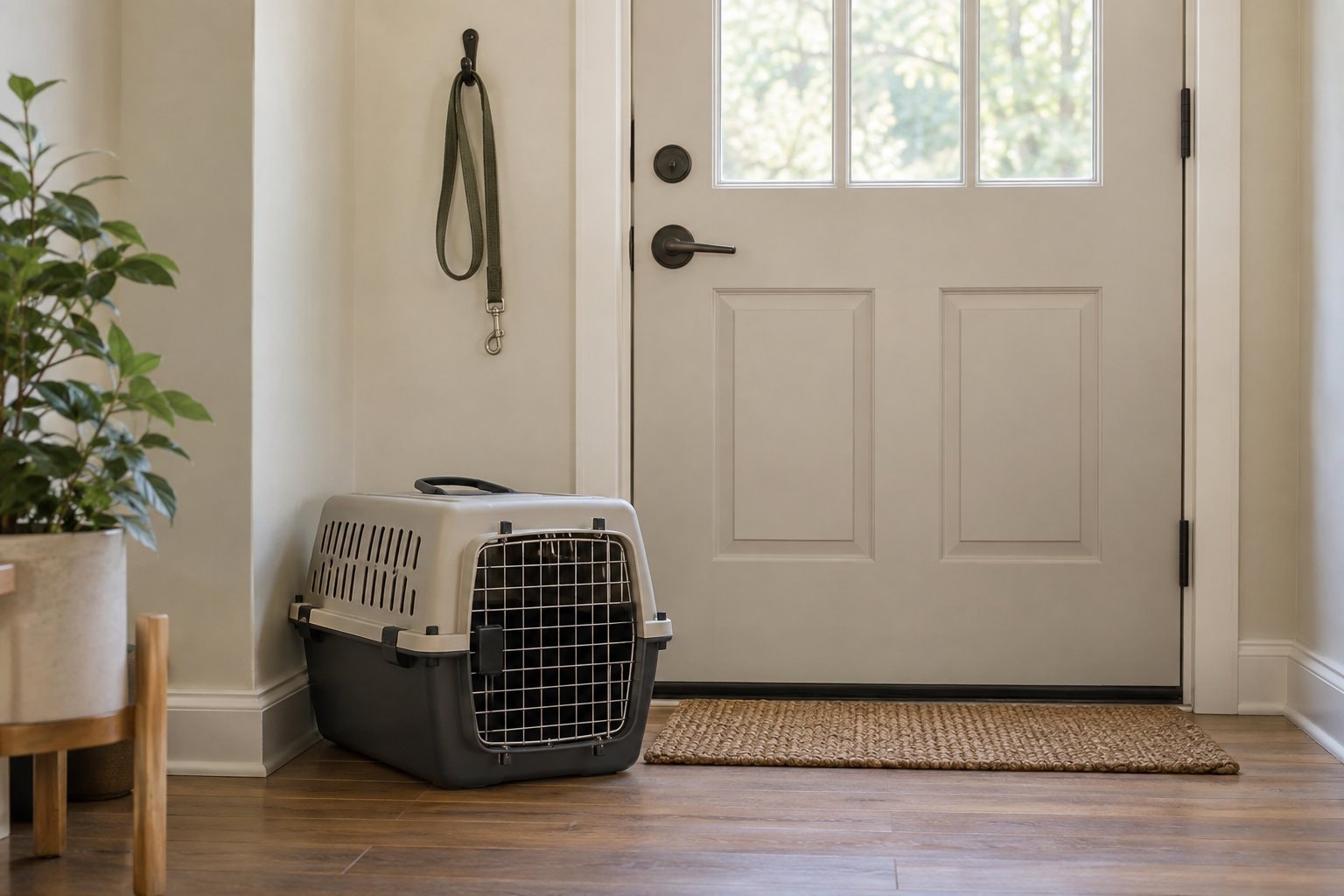
Give the child a route, not a rescue task
Pet arrangements need an adult responsible for them. That adult can consider where the leash or carrier is kept and whether the pet can be taken along while leaving safely. A child's responsibility is to follow the escape plan. Searching for a hiding cat or collecting animals from other rooms is not a child's job.
A county fire and rescue service's pet safety guidance says people must stay outside after escaping and tell firefighters about a trapped pet, rather than returning for it. Parents can make that rule part of the household's ordinary language about fire. It still applies if the child can hear or see the animal.
A plan that depends on a particular adult being home also needs consideration when that adult is away. The people caring for the children need to understand the escape arrangements and the pets' usual locations. Keep the priority clear even when responsibilities change: the children leave without waiting for an animal.
Make the alarm familiar without making it a game
The U.S. Fire Administration's smoke-alarm guidance explains the use of alarms in bedrooms, outside sleeping areas and throughout the levels of a home, and describes interconnected alarms sounding together. It also says maintenance follows the manufacturer's instructions. Adults remain responsible for the alarms.
Parents and carers can explain what the home's alarm sounds like and what the sound means. Adult-led practice can connect the sound to leaving by the planned route. It should not depend on a child deciding whether a warning is real or searching the home to find its cause.
Households have different communication and access needs. The adults can consider how the alarm and the escape instructions will reach each child. Familiarity with the child's needs belongs in the plan. A general page cannot determine which arrangement fits a particular household.
Practise the route from where children actually are
Ready.gov's home-fire guidance recommends finding two ways out of each room and practising the household escape plan. Parents can use that planning step to examine bedrooms, play spaces and other rooms children use. The route needs to be understandable from those places, not only from the front door.
Adults can lead practice at an ordinary, calm time. The purpose is to learn the route and the meeting place outside. It is not a race, an animal-handling lesson or a test of bravery. Pets do not need to be startled to make the planning discussion realistic.
The fuller smoke alarms and escape plans guide connects the household route with pet arrangements. During planning, notice obstacles such as stored belongings near an exit or a carrier that is hard for the responsible adult to reach. The discussion can solve those practical problems before a warning sounds.
Explain what happens when a pet stays behind
Children may worry that leaving a pet means abandoning it. Parents can explain that firefighters need to know where the animal might be. Adults pass on its usual hiding places and the last place it was seen. Staying outside gives responders that information without sending another person into danger.
Avoid promising that every pet will already be outside or that a child will always be able to carry it. The plan needs room for uncertainty. Clear, calm explanations can hold the boundary without inventing a guaranteed outcome. Children can care about their animals while leaving rescue to the people managing the scene.
Adults can revisit the plan when sleeping arrangements, carers or pets change. A child sleeping in a different room needs the route explained from that room. A visiting carer needs the same outside meeting place and the same boundary about animals. Keeping the instructions consistent avoids asking a child to choose between several versions of the plan.
During practice, the adult can notice where instructions are unclear and adjust the explanation. A hesitation is useful information for planning. It does not need to become a criticism of the child or a demand to manage a pet.
Keep the outside plan simple
The meeting place helps the adults account for the household. An animal already outside stays with the adult responsible for its secure carrier or leash. Children do not need to manage a frightened pet while the family is still sorting out who is present.
The first-hours page after a house fire covers what comes next. The pet emergency kit guide describes items prepared in advance. Those supplies are useful when available; they are never a reason for a child or adult to delay leaving or go back inside.