
Start with the household’s plan
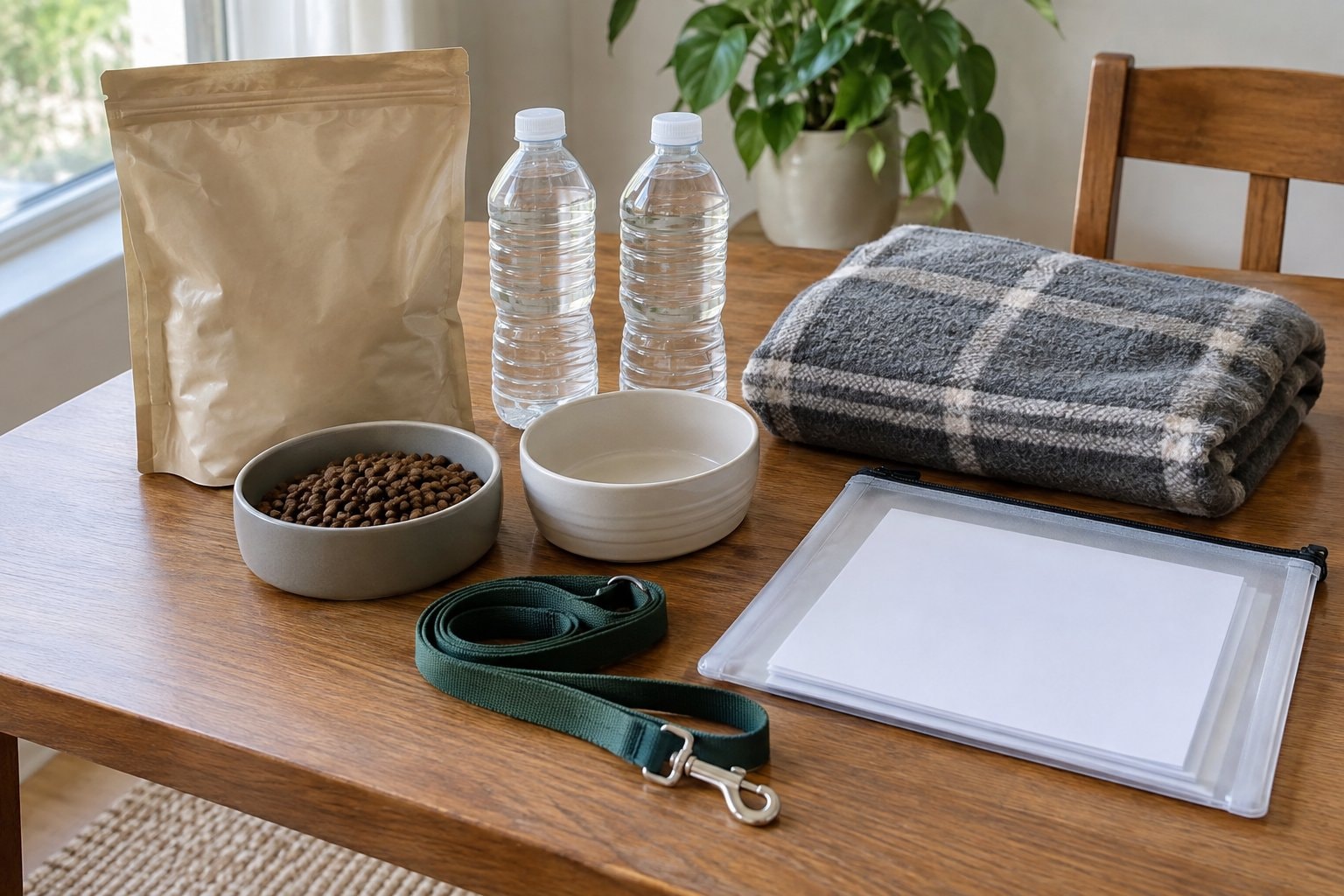
Ready.gov’s household kit guidance describes a kit as basic supplies the household may need during an emergency. It includes food, water, lighting, charging equipment and important records. Pet items belong beside that planning, rather than becoming a separate bag that nobody remembers when the household leaves.
Find out who will carry the supplies and how pets will be contained. Think about an ordinary journey to the proposed safe destination. A bag should be manageable while the household carries or leads its animals. Do not block an exit with supplies or place a kit where it can only be reached by passing a cooking or heating hazard.
Make a leaving kit and a home kit
Ready.gov recommends two pet kits: a lightweight version for evacuation and a larger kit for staying in place. These serve different situations. The larger kit does not make staying home appropriate during a fire or when officials direct evacuation. The household must follow the situation and the directions of local responders.
Keep the leaving bag easy to lift, with the essential records and familiar equipment close to it. Keep the larger supply in an organised place that can be checked without unpacking the whole home. If supplies are split between locations, explain that arrangement to the adults who care for the animals. Avoid a plan that depends on finding loose items across rooms.
Food, water and ordinary feeding
- Keep the animal’s usual food in a sealed container suited to storage.
- Keep drinking water with the supplies and include usable bowls.
- Include the ordinary utensil needed to open or serve the stored food.
- Write down the usual feeding routine for a temporary caregiver.
Use the animal’s normal food rather than adding unfamiliar items solely for an emergency. Check the container’s condition and the food’s storage instructions. Keep the bag or container dry and closed. If another caregiver will feed the pet, make the description clear enough to follow without guessing at which food or bowl belongs to which animal.
Containment and everyday comfort
The American Red Cross pet kit guidance includes sturdy leashes, harnesses or carriers, food and water bowls, litter supplies, current photos with pets and portable bedding or toys. Choose equipment suited to each animal’s ordinary care. A travel carrier needs to be familiar and usable, rather than something first opened during an urgent departure.
- Keep a leash and harness or secure carrier ready for the pets that use them.
- Check enclosure doors, clips and fastenings before the equipment is needed.
- Include litter and a suitable tray for cats, with materials for ordinary clean-up.
- Choose a familiar blanket or small comfort item that can be carried easily.
Leave the carrier available as part of the animal’s normal surroundings where appropriate. Check whether the pet can be contained without moving other supplies out of the way. For birds and small pets, the travel arrangement may differ from the everyday enclosure. Ask the veterinarian about a suitable arrangement for the kind of animal before an emergency.
Keep records together and dry
Use a waterproof folder or container for identification records, microchip registration information, recent photographs and records of veterinarian-directed care. Keep accessible electronic copies as well. The folder should tell a temporary caregiver what the animal normally needs and where questions about care belong. It should not leave important instructions to memory.
Include a current picture of the pet with its person and clear pictures of its appearance. The photos and identification guide explains how those images work alongside collars and chip records. Check that the household can be reached through the registration details if its usual home is unavailable. Keep private records within the household’s care arrangements.
Put the leaving supplies where people can find them
The ASPCA preparedness guidance recommends keeping the kit and leashes close to an exit and making the location known to the household. Close means accessible without narrowing the way out. Store the records inside the bag and keep bulky carriers beside it when they will not fit. Make the arrangement easy to explain to a trusted caregiver.
Practise collecting the bag and equipment while the home is safe. Check whether doors still open freely and whether the person carrying supplies can also manage the pet’s usual containment. The escape-plan guide explains the limit during a real fire: no item is a reason to delay leaving or return inside.
Make checks part of spring and autumn planning
Use spring and autumn household reminders to inspect the kit, and revisit it whenever a pet’s needs or the household change. Check that food is still suitable, water containers are sound, equipment fits and records are current. Replace used or out-of-date supplies. A familiar reminder is useful only when someone knows what it covers.
- Open the bag and check that the essential items are still present.
- Review food and water storage and replace supplies as needed.
- Check carriers, leads, harnesses and enclosure fastenings.
- Refresh photographs, identification details and care records.
- Confirm the adults responsible and the proposed safe destination.
When a pet’s food, size or care changes, adjust the bag at the same time. When the household moves, check the location and destination plan again. The temporary accommodation guide gives questions to ask about receiving the pets. A useful kit supports that arrangement; it cannot promise a room or an animal-care space.
If an emergency has already started, get everyone out and call 911 during a fire. Take only what can be reached safely without delaying departure. Tell the next caregiver what supplies are missing and ask for help arranging them. The kit is preparation for leaving, never a reason to go back.
After using the leaving kit for a trip or temporary stay, put it back into its usual arrangement. Replace items that were used and return the records to the folder. Let the other adults know if something is still missing. A bag beside the door may look ready while its useful contents are elsewhere.