
Animal emergency work includes more than the moment an animal leaves a building. People carry enclosures, move supplies, manage doors and help arrange temporary care. Some work belongs to trained emergency responders; other work takes place in shelters, temporary housing or ordinary animal-care settings. Understanding that difference is part of understanding the demands of the work.
This page is for volunteers, animal-care workers and people considering those roles. It reports what general references and research describe about smoke, heat, lifting and animal-related injuries. It offers no assessment of an individual's fitness, no exercise plan and no instructions for entering a dangerous place. This is general information, not medical advice.
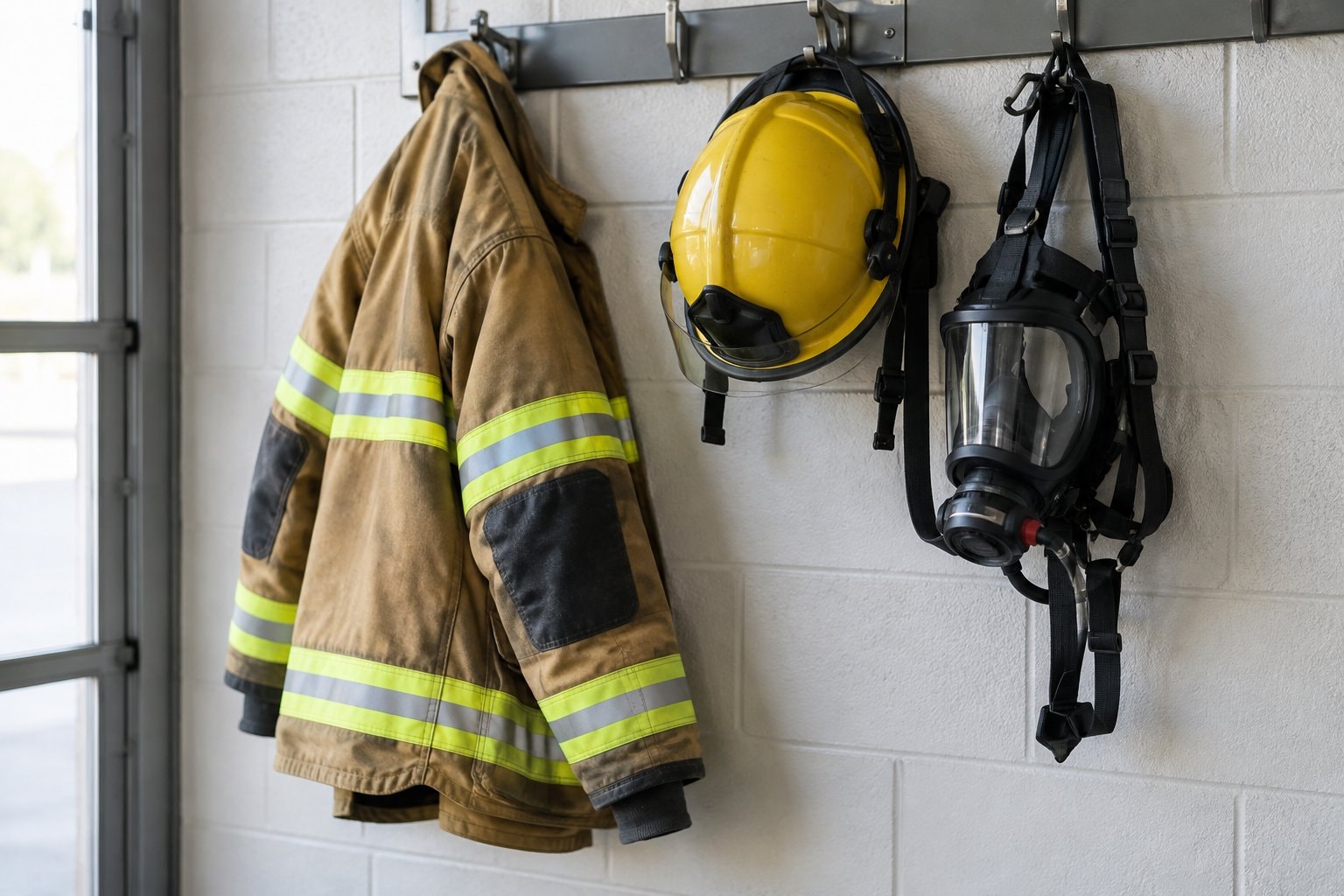
Smoke entry belongs to trained response
Wikipedia's breathing-apparatus reference describes equipment that supplies breathable gas in an atmosphere dangerous to life or health, and identifies firefighting as a setting where it is used. That description helps explain why entry into smoke is specialised work. The apparatus is part of an organised response, rather than something a bystander can replace with ordinary household equipment.
Equipment alone does not define a person's role. A responder works within training, direction and the arrangements for the actual incident. A volunteer taking supplies to temporary animal housing has a different task from a firefighter entering a building. Keep those boundaries clear in planning and in the language used to explain an assignment.
For a household at a fire, the immediate action remains leaving and calling 911. Stay outside and tell firefighters about animals still inside. Wanting to help does not make an unsafe entry part of a household pet plan. The guide to volunteering in animal disaster response explains how support roles and preparation fit around the trained response.
Heat is part of the working setting
A study published in 2009 examined physiological and perceived heat strain during simulated firefighting in protective equipment. It reanalysed laboratory and field data using measures of strain, and reported increasing strain during the activities. Its findings concern those study settings; they do not establish a safe working duration for an individual reader.
The study's emphasis on both measured and perceived strain matters when reading it. A worker's description of how demanding a task feels and the measurements taken during that task are different kinds of information. Neither becomes a household rule about how long someone can continue. The abstract reports a research comparison, not a timetable for volunteer work.
Working conditions also include the surroundings and the organisation of a task. General occupational heat guidance considers indoor and outdoor settings, physical activity and supervision. For animal-care work, those subjects belong in the organisation's planning and training. Ask who directs the assignment, how concerns are reported and what arrangements exist when work must stop or change.
Backs, lower limbs and ordinary physical tasks
A critical review published in 2019 found the back and lower limbs were leading reported sites of firefighter injury, with sprains and strains prominent among musculoskeletal injuries. The review considered injury records from studies of firefighters. Its abstract described the included studies' methodological quality as fair, which is relevant to the strength of conclusions drawn from them.
The review also reported slips, trips, falls and tasks involving bending or lifting among the circumstances described. These are features of the research record, not a diagnosis for someone doing similar work. A shelter worker, a volunteer moving bedding and a firefighter at an incident may share some physical tasks while facing different conditions and responsibilities.
A systematic review and meta-analysis published in 2024 examined musculoskeletal disorders among firefighters and reported the lower back as the most affected body region in its pooled findings. Musculoskeletal refers to muscles and the structures involved in movement. Combining findings can describe a pattern across studies, but it does not predict what will happen to a particular worker.
A review published in 2022 examined non-cancer health risks in firefighters and included lower-back problems among its findings. It used a narrative account because the studies differed, and warned that job and rank classifications vary between countries. Those limits matter: the same job label does not always describe the same work or exposure.
Moving loads is a task to understand
Moving an enclosure involves lifting, carrying, lowering or transferring a load. The route includes doors, turns and the place where the enclosure will be set down. A written assignment can describe these ordinary requirements without assuming the animal will remain still or the route will remain clear. Ask what the task actually involves before accepting responsibility for it.
OSHA's ergonomics overview describes workplace factors such as heavy lifting, bending, pushing, pulling and awkward positions in its discussion of musculoskeletal disorders. Ergonomics concerns how a job fits a person. Here, that reference supplies context for understanding physical tasks; it is not an instruction to use a particular technique or continue through discomfort.
A clear work plan can identify who assesses a load, who directs a move and where concerns go. An uncertain volunteer needs a person to ask, rather than an expectation of improvising. Record the limits of the role and the equipment that the organisation actually uses. Training for that setting belongs with the people responsible for the work.
NIAMS describes back pain as a broad problem that can follow an accident, a fall or lifting, or develop gradually. Its overview describes several possible causes. That breadth is a reason to avoid guessing from the task alone what an individual's pain means. A general article and a record of an assignment cannot make that assessment.
The animal changes the working situation
A study published in 2016 examined accepted workers' compensation claims among animal-care workers in Washington State. Animal-related injuries were the most commonly reported type across the occupational groups examined, although the animal source differed by setting. The study describes accepted claims, which is a specific record of workplace experience rather than a count of every possible incident.
A survey published in 2000 asked veterinary practices in Western Australia about occupational disease and injury. Its reported physical injuries included dog and cat bites, scratches and back injuries associated with lifting heavy animals. These findings came from questionnaire responses, and the veterinary setting is not interchangeable with every form of disaster volunteering.
An animal is not an ordinary parcel. Its movement, fear and unfamiliar surroundings are part of the situation the responsible organisation must consider. Explain handling concerns before a task begins. If a volunteer lacks the relevant training or cannot manage an assignment, that information belongs with the person directing the work, not in an improvised attempt to complete it.
Recognise when professional help belongs in the picture
Get medical help promptly for back pain that does not settle or comes with numbness or weakness, for signs of heat illness such as confusion or fainting, or for a bite that breaks the skin; MedlinePlus provides general information on back injuries, heat illness and animal bites.
The research discussed here does not replace that individual assessment. A publication about a group cannot decide whether a particular person needs help, whether a task can resume or what caused a symptom. Questions about personal health belong with a medical professional. Questions about an animal's condition belong with a veterinarian.
Rest, recovery and training belong to working life
Ordinary work planning includes time away from the task, reporting concerns and learning the role. Discuss how an assignment ends and who takes over. Keep the distinction between a planned duty and an emergency clear. Rest and recovery can be discussed as parts of working life without promising a particular health result or setting a schedule here.
Training also includes knowing which person or agency holds responsibility. The guide to who helps a household after an emergency describes the wider handover between response, shelter and animal-care roles. Clear boundaries help people explain what they are doing, what remains uncertain and where the next decision belongs.