
A storm can change the household's plans before it reaches the front door. Travel routes may be uncertain, electricity may stop and a usual place to stay may be affected too. Pets need to be included in decisions about leaving or staying, rather than added after the household has already chosen a route or destination.
Begin with the instructions from local officials. They know the conditions being assessed and the arrangements in place. A general guide cannot tell whether a particular street is passable or a particular home is safe. Keep a way to receive local information, and make sure another household adult knows where to find it.
Make the leaving plan include animals
Ready.gov's pet-preparedness guidance says that pets need to evacuate with their household when officials direct people to leave. It recommends planning a safe destination in advance because many public shelters and hotels do not admit pets. That makes the destination part of the plan, alongside the route and the supplies.
Ask friends or relatives about possible temporary care before a warning is urgent. Check the needs of each animal, not just whether a place describes itself as pet-friendly. A dog, a cat and a pet kept in an enclosure may need different arrangements. Keep another option in mind in case the first destination is affected by the same emergency.
During preparation, bring pets under direct control and make their travel housing available. Know where the leash, harness and carriers are kept. Do not leave a pet behind tied up outside or closed in a room because returning later seems likely. Travel plans can change, and the household may not be allowed to return when expected.
Floodwater is not a route to test
Ready.gov's flood guidance says to evacuate immediately when directed, avoid driving around barricades and stay out of floodwater. It also warns against bridges over fast-moving water. Those instructions apply to the route used with pets as much as to any other trip. Do not enter the water to find out how deep it is.
A map remembered from ordinary travel may no longer describe a usable route. Road closures and local directions take priority. Keep pets secured for travel so a delay or a stopped vehicle does not turn into an animal escaping. If the route changes, tell the person expecting the household when it is safe to do so.
Do not let a wish to collect belongings overrule an evacuation direction. If there is time to prepare, use the supplies already gathered. If there is not, leave with the people and animals that can be brought safely. Tell emergency responders about any animal left behind, including its location and kind. Do not cross a closure to retrieve it.
Separate an outage from a safe place to stay
A power outage affects more than the lights. Think about the equipment the household relies on, how information will reach everyone and whether the current place remains suitable. Decisions about animal housing may involve a veterinarian or an experienced caregiver, especially for animals with particular environmental needs. Do not improvise a new arrangement without understanding it.
Ready.gov's power-outage guidance recommends keeping refrigerators and freezers closed, using generators only outdoors and avoiding the use of a gas stove or oven to heat a home. Its preparation section also recommends taking stock of the items that rely on electricity. That review helps a household see which ordinary activities need a different plan.
Keep emergency lighting somewhere accessible. An adult carrying a pet enclosure may already have full hands, so think about how the route will be lit without juggling loose items. Check that gates and doors can be managed without the usual electrical equipment. Deal with questions about safe operation in advance, using the relevant instructions or professional help.
Pack for care, not just travel
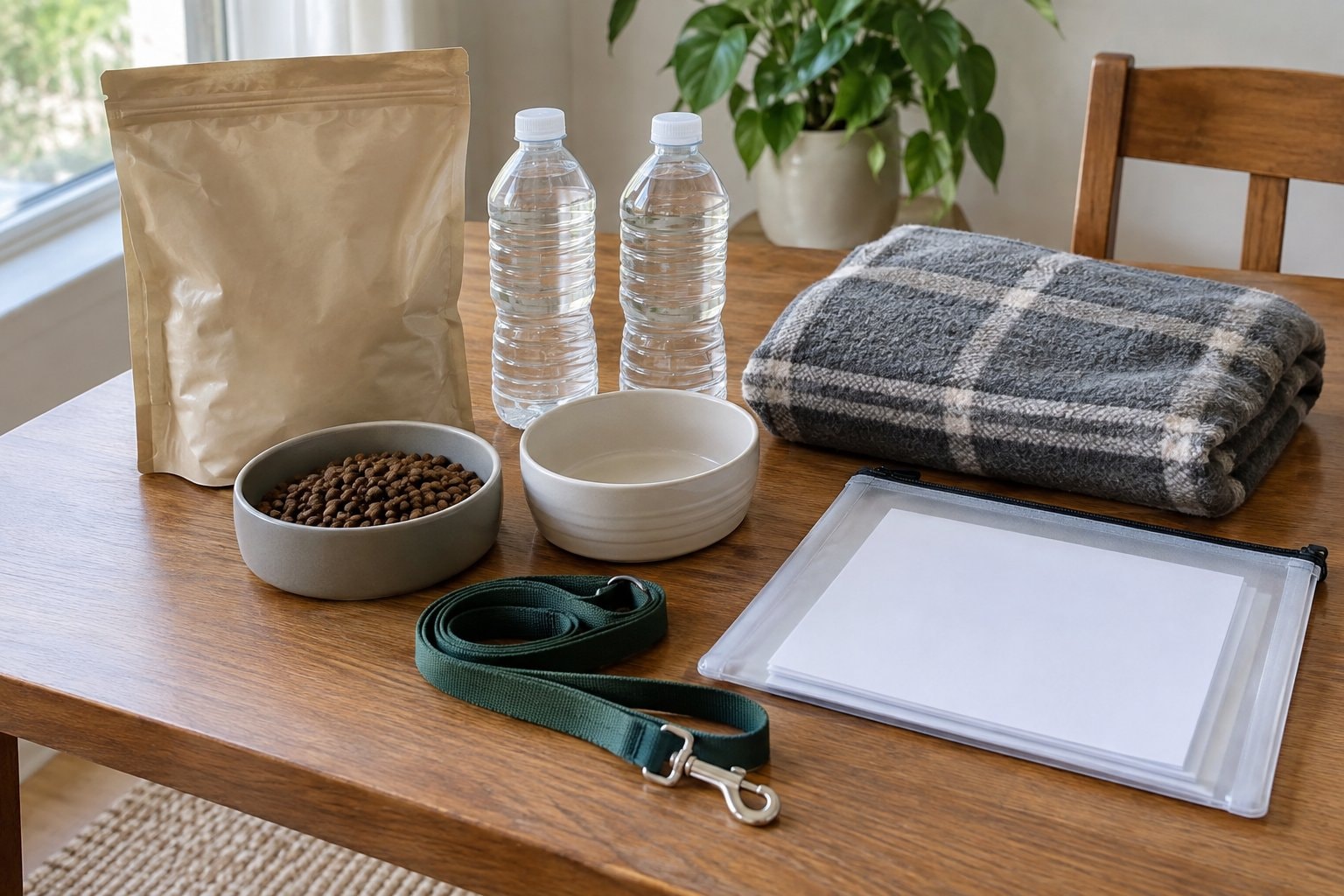
A pet carrier gets an animal out of the home; supplies make the stay after arrival more manageable. Keep food, bowls, suitable bedding and care records together. Include the animal's ordinary feeding information so another adult can understand it. The pet emergency-kit guide explains how to arrange supplies for leaving and for staying at home.
Keep identification records with the plan. A clear photograph, current tag details and microchip registration information can help if a pet becomes separated. Make a paper copy where practical as well as keeping digital records. A phone with no power is a poor place for the household's only copy of essential information.
Review the kit when the household's needs change. Different food, a new carrier or an animal joining the home may alter what belongs in it. Check that another adult can locate the supplies. A carefully packed bag is useful only if people know it exists and can carry it without unsafe delays.
Give the temporary caregiver a clear handover
After travel, explain who is responsible for each pet and what the usual routine involves. Share the feeding notes, relevant records and any handling concerns. A friend willing to offer space may still need practical information about the animal. Do not assume familiarity with a pet means familiarity with its care.
Keep the setting as quiet and orderly as circumstances allow. Make sure doors and enclosure fastenings are understood before a pet is moved between spaces. Ask about separation from unfamiliar animals. A temporary arrangement needs clear boundaries, especially if several households are sharing the same place.
If staying away extends beyond the first plan, talk about the next arrangement rather than assuming it can continue indefinitely. The guide to temporary accommodation with pets covers housing options and useful questions. Veterinary concerns belong with a veterinarian, and local shelter or animal-control staff may be able to explain animal-care options.
Wait for clear information about returning
Do not decide that a home is ready because the weather has eased or lights have appeared nearby. Follow local directions about re-entry and any restrictions. Ask what the household needs to know before animals return. Keep the temporary arrangement in place while those questions are settled, where possible.
Gas and carbon monoxide concerns may be part of the wider situation after an outage. The gas and carbon monoxide guide explains the household warnings and the need to leave and call 911. This site has no local conditions feed and cannot decide whether a property is safe. Use the people assessing the actual emergency for that decision.