
Fostering a displaced pet means providing temporary care while another household works out its next steps. A home emergency can interrupt ordinary routines and leave a family without suitable space for its animals. A foster arrangement can bridge that gap when the people involved understand its purpose and responsibilities.
This site accepts no foster applications and places no animals. The page describes temporary care in general. It does not match households with pets or confirm that a foster place is available. An actual arrangement needs agreement between the responsible family, caregiver and any organisation coordinating the placement.
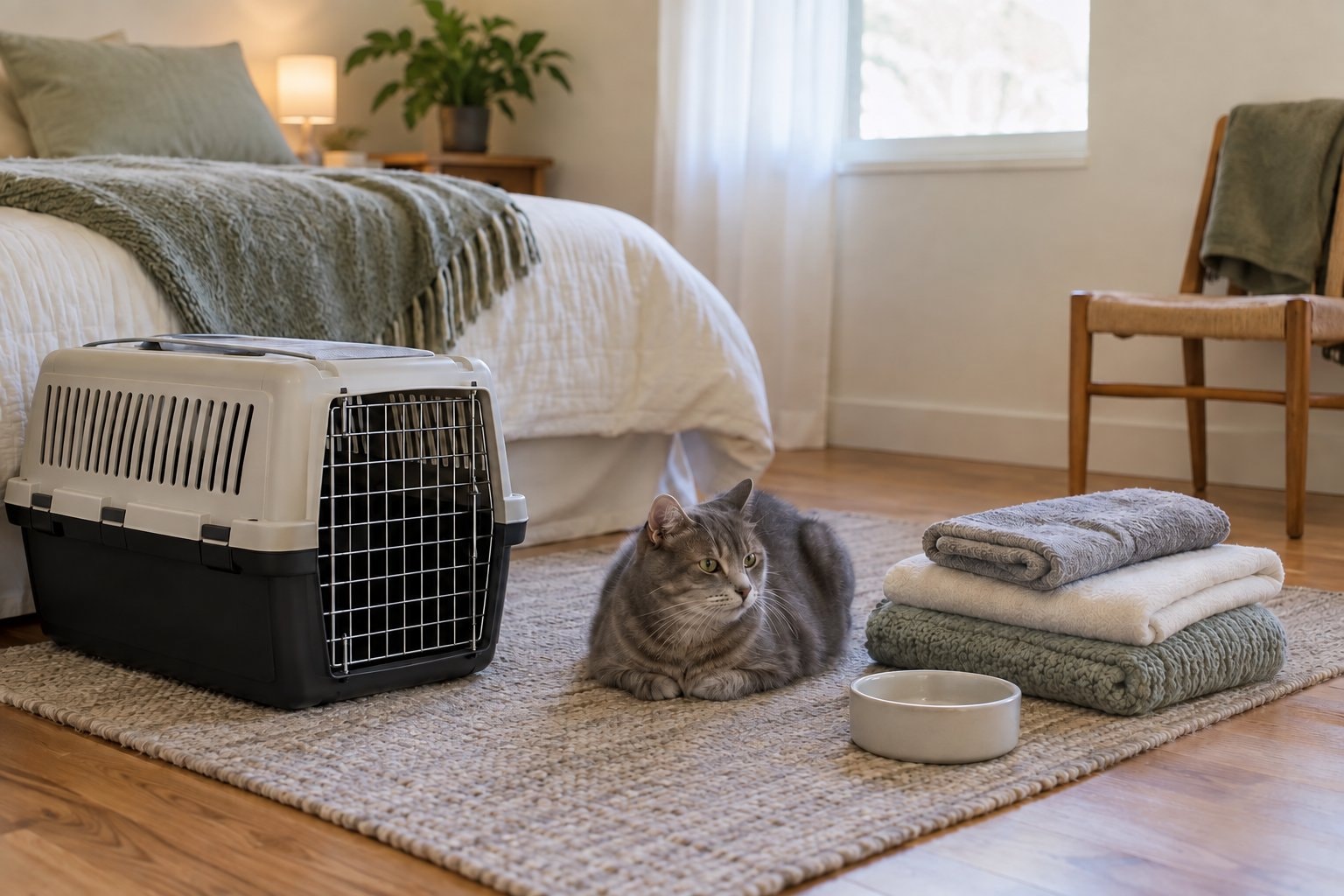
Foster care takes different forms
The ASPCA's account of foster caregiver types describes general foster homes, care for young animals or animals with additional needs, and community caregivers who help found pets until reunion or placement. These roles differ in the experience and support they involve. Temporary care after a household emergency has its own purpose when the intention is a return to the original family.
That intention needs to be understood at the start. Caring for an animal while its family finds accommodation is different from caring for an animal awaiting a permanent home. The word foster can be used in both situations. It does not settle who makes decisions or what happens when the family is ready for its pet to return.
Wikipedia's reference on animal rescue groups describes volunteer foster networks and groups that use facilities, private homes or both. A network is an arrangement between people rather than simply a spare room. Its coordination matters alongside the care provided inside each home.
A suitable space and ordinary routines
A foster household usually provides a place to rest, ordinary feeding and water, safe containment and attention to the animal's routine. The details depend on the animal and the agreed arrangement. Before care starts, the household needs to understand what supplies come with the pet and who provides anything missing.
The ASPCA's general cat-care guidance describes a clean, dry resting place, fresh water and a litter box in a quiet, accessible location. In a temporary room, these basics give the caregiver a practical starting point. They do not replace individual advice from the responsible veterinarian.
Dogs also need a suitable quiet resting space and arrangements for ordinary outings. Small pets need accommodation appropriate to their kind. A household's existing equipment may not fit every animal. Space alone is not enough if the people providing care cannot manage the animal's usual needs.
The room needs to work for the caregiver as well as the pet. Food, cleaning supplies and records need sensible places. Doors and windows need attention so that routine movement through the home does not become an escape opportunity. Everyone living there needs to understand which areas belong to the temporary arrangement.
Keep resident pets apart at first
At the start, keep the displaced animal separate from resident pets. A new arrival does not need an immediate introduction to the whole household. Separate spaces make it easier to know who is eating, resting and using which supplies. They also give the coordinator time to understand whether the arrangement is suitable.
Sharing food bowls, resting places or a litter area need not be part of the initial plan. The caregiver can follow the coordinating organisation's directions about any later introductions. Questions about the animals' health belong with a veterinarian. Separation is a practical starting arrangement, not a home assessment of illness.
Visitors and children also need clear boundaries around an unfamiliar animal. The foster household can keep ordinary access predictable and avoid making the pet the centre of a busy welcome. A quiet temporary stay does not require everyone to handle the animal or test how sociable it is.
The guide to cats in emergencies discusses hiding and a familiar carrier. A cat that chooses a quiet hiding place may still need space rather than repeated attempts to draw it into the room. Knowing where the animal is matters without turning every check into handling.
Records and veterinary visits need an agreed route
The household providing care needs the information relevant to its task. That can include the pet's usual food, identification, familiar routines and existing care records. Describe what is known and keep uncertainty visible. A record from the family and an observation made in temporary care are different kinds of information.
Decisions about veterinary visits need a clear route before an urgent question arises. Who is responsible for arranging the visit, accompanying the animal and passing information back? A caregiver can note what has changed without diagnosing the cause. The veterinarian answers questions about the animal's health.
Written observations can help the people responsible follow the temporary stay. Plain descriptions are useful: whether the pet accepted its usual food, where it rested and whether it behaved differently from the routine described by the family. Avoid labels that imply a diagnosis or a settled judgement about the animal.
Stay clear about the family's place in the arrangement
A displaced family may be managing housing, belongings and other practical demands at the same time. Foster care does not require judging how quickly those problems are resolved. The agreement can describe how information is shared and how changes to the temporary arrangement are discussed.
Responsibility needs to remain clear if the caregiver's circumstances change. An informal move to another household can leave the family unsure where its animal is. A new placement needs coordination and a record of the handoff. The guide to who helps after a home emergency explains the wider roles around that transition.
The return is part of the care
Saying goodbye belongs to a temporary placement whose purpose is reunion. The animal's familiar items and care records can go with it. A calm handoff gives the family the information gathered during the stay without turning the return into a test of affection between households.
Sometimes circumstances lead to a different decision. The page on temporary care, surrender and adoption explains those distinctions. They deserve an explicit conversation rather than an assumption made during fostering. A temporary caregiver's attachment does not by itself change the purpose of the agreed care.