
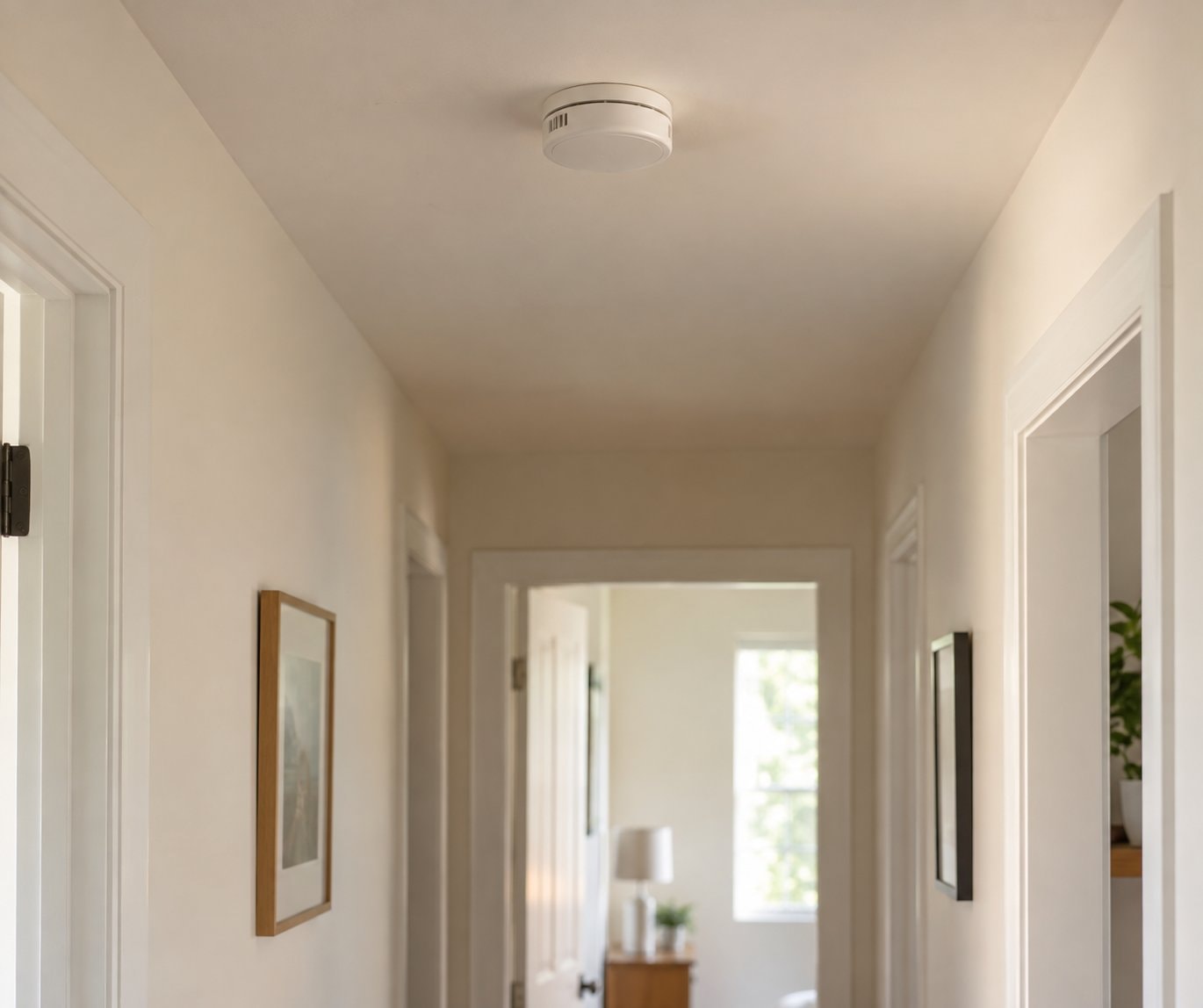
Know what the alarm is sensing
The Wikipedia reference on smoke detectors explains that alarms sense smoke through light-based or ionization methods. In a light-based alarm, smoke particles change how light reaches a sensor. In an ionization alarm, smoke changes an electrical process inside the unit. Both are ways of detecting smoke; the household still needs to respond to the warning.
Interconnected alarms signal together when smoke is detected by a connected unit. The U.S. Fire Administration recommends this arrangement. It also describes alarms that use flashing lights or vibration for people who cannot hear a standard alarm. Consider how everyone in the household will receive the warning, rather than assuming that an audible sound is enough for each person.
Check placement across the home
The U.S. Fire Administration advises smoke alarms inside bedrooms, outside sleeping areas and on every level, including the basement. It says alarms belong on a ceiling or high on a wall, with the exact position guided by the unit’s instructions. Hardwired installation belongs with a qualified electrician. Ask the local fire department about local alarm guidance if placement is uncertain.
Look at the whole sleeping arrangement. A room used by a guest or a different part of the home where someone now sleeps changes the planning conversation. Closed doors and separate levels matter when thinking about how a warning reaches people. Pet sleeping places are part of the escape discussion, but an animal is not an alarm system.
Keep testing and replacement visible
The U.S. Fire Administration recommends monthly smoke-alarm tests and replacing conventional units after 10 years. It also gives instructions that differ with the alarm’s power supply, so use the guidance for the actual unit. A maintenance reminder should identify the alarm concerned and make the next required check easy to find.
Check the unit’s instructions and manufacture information when planning replacement. Do not rely on whether it looks new from below. Battery handling and sealed units are different arrangements. If the household cannot explain how an alarm is powered or maintained, ask for appropriate help rather than taking it apart or assuming it will keep working.
Never remove a battery or disable an alarm because cooking has set it off. The U.S. Fire Administration warns against disabling alarms. Manage cooking and follow the unit’s instructions for nuisance alarms. The guide to pet-related fire hazards covers the cooking, heating and cord arrangements that need attention alongside alarm maintenance.
Map the routes people can actually use
Ready.gov recommends finding two ways out of each room in case a usual route is blocked by fire or smoke. Check whether the household can open the doors and windows involved and get through the route. Plan around the actual needs of the people who live there, including anyone who uses mobility equipment.
Choose an outside meeting place that everyone can identify without an argument. Explain how each person gets there and who will check that the household is together. Keep doors and exit paths clear during ordinary life. A carrier, pet bed or supply bag should not narrow the route or have to be shifted before a door can open.
Assign pet roles with a clear limit
Decide which adult normally takes which pet or carrier while leaving, only if that can be done without delaying escape. Keep a leash and the relevant carrier accessible. Know an animal’s usual hiding places so they can be described to firefighters. Those details are information, not instructions to search through smoke.
Say the limit plainly when discussing the plan: leave if an animal cannot be reached safely, and never go back. Children need an adult-led escape arrangement. Their task is to leave with the people responsible for them. The children and family escape-plan guide is written for parents and carers planning those roles.
Practise the ordinary parts before the emergency
Walk through the exit routes while the home is safe. Check that the person responsible for a carrier knows its location and can open and close it. Include the pets in calm carrier practice as appropriate to their ordinary care. A practice is a chance to notice a blocked doorway or confusing role and change the plan.
Talk through what happens when an adult is absent or a pet is resting elsewhere. Avoid making the plan depend entirely on a particular person being home. Friends or relatives helping with routine pet care need to understand the same boundaries. Practice should make leaving clearer, rather than creating a longer list of tasks to do during a fire.
When the alarm sounds, stay with the escape plan
Get everyone out and call 911. Keep any pet already outside on a leash or in a secure carrier, away from the scene. Never return inside for an animal or equipment. A county fire and rescue service advises telling firefighters about a trapped pet. Explain its kind, where it was last seen and its usual hiding places.
Give responders an update if a pet is found outside or its location changes. Wait where the fire department directs and ask before returning to the home. An animal that was in smoke needs a veterinary check even if it seems fine. The first-hours guide brings those next steps together once the household is outside.
When the household changes its sleeping rooms or moves furniture, check the routes again. A door that was easy to open can become blocked by a chair or supplies. The meeting place also needs to be familiar to anyone staying temporarily. Explain the plan to a guest or caregiver before leaving them responsible for the home. Keep the same boundary for everyone: an animal still inside is information to give firefighters from outside.