
The immediate job is to get people outside and keep them there. Once outside, tell firefighters about every pet that may still be in the home. This site cannot help directly. The fire department on scene, a veterinarian, the Red Cross and the local animal shelter or animal control are the people to ask about the next steps.
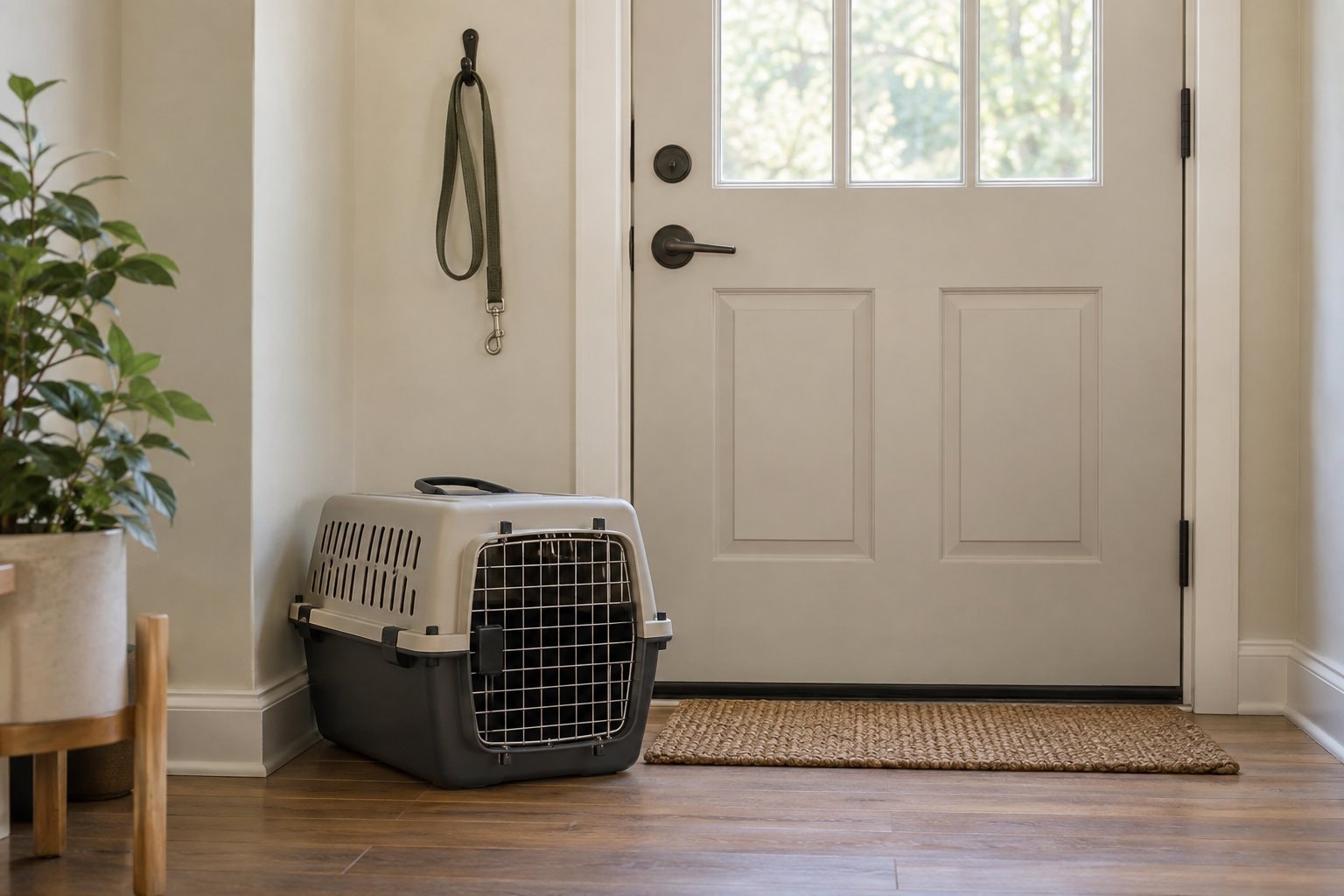
Stay outside while firefighters work
Do not return for an animal, a carrier, a document or a bag. Keep the route clear for responders and follow their directions about where to wait. If members of the household left by different exits, confirm who is outside. Tell responders about anyone whose location is unknown. Avoid sending someone towards a doorway to check for a pet.
The warning from a county fire and rescue service’s pet tip sheet is direct: people must stay outside and tell firefighters about pets still inside. Even a familiar room cannot be judged from the street. Knowing where a cat hides is useful information for firefighters; it is not a reason to enter.
Make the pet information easy to understand
Ready.gov’s home-fire guidance says to notify firefighters immediately about trapped pets. Explain the kind of animal, how many may be inside and where each was last seen. Name the room and the hiding place in ordinary language. Mention a closed door, enclosure or carrier if it helps locate the animal. Say clearly when a detail is uncertain.
Keep track of changes as pets are brought out or located elsewhere. An adult can make a brief note on a phone or paper while another stays with the animals already outside. Tell the responder who received the original information when the situation changes. This keeps a pet known to be safe from remaining on a missing list.
Keep an outside pet secure
American Humane’s fire-safety advice explains that pets may try to escape amid the activity outside a fire. Use a leash or secure carrier away from the scene. Stay out of responders’ routes. Ask before moving to a different waiting area. Do not let an animal roam while attention is on the building.
Keep a carrier closed while outdoors. Check its fastening before moving it and avoid opening it just to reassure the animal. If the proper equipment was left inside, tell responders what is needed. Do not go back to collect it. Arrange another safe means of keeping the pet contained with help from people already outside.
Arrange the veterinary check
Every animal that was in smoke needs a veterinarian’s check, even if it seems fine. The Merck Veterinary Manual describes smoke-related injury that can be slow to become apparent and can occur without obvious marks on the outside of the body. A pet’s appearance on the pavement is not a substitute for that assessment.
Tell the veterinarian that the animal was in a house fire. Share what is known about its location, the smoke and when it came outside. Explain any changes noticed since then without trying to decide their cause. Ask the veterinarian what happens next and what information to pass to a temporary caregiver. The smoke and pets guide explains why the check matters.
Ask where the household and pets can stay
If the home cannot be used, ask the fire department on scene about disaster support. The American Red Cross explains its shelter arrangements: its disaster assistance is free, and workers do what they can to accommodate household pets when possible. Depending on the situation, pets may need a different location. Service animals are always welcome and are not considered pets.
Before leaving for a destination, confirm that it can receive the animals in your household. Friends, relatives or temporary boarding may be possibilities, but space cannot be assumed. Ask what the next location needs and whether people and pets can stay together. The guide to somewhere to stay with pets gives questions for those conversations.
If a pet is missing, collect useful details
Tell the local shelter or animal control about an animal that escaped or cannot be located. Gather recent photographs, distinctive markings, collar details and any identification records available outside the home. Note where and when the animal was last seen. Keep the distinction clear between a pet believed to be inside and a pet seen leaving.
A microchip is useful when the animal is scanned and its registration details lead to the right person. Have the chip record ready if it is accessible and check that the registration can reach you while displaced. The photos and identification guide explains how pictures of pets with their people fit alongside those records.
Give the next task to the next person
Ask a trusted adult to help with a clear task, such as keeping pets secure, arranging transport or writing down the next destination. Share information rather than asking someone to solve everything. Keep the household together where responders say it is safe, and let people know before leaving the scene.
For the next handover, carry a short account of the fire, the veterinary check and the temporary care plan. If records were left behind, say so. Ask the veterinarian or relevant office how to obtain copies later. Nobody needs to re-enter a building to make the paperwork complete. Safe people, contained pets and a clear next destination come first.
Before travelling, check that the person driving knows the destination and that the destination knows which animals are coming. Keep a carrier or leash ready for the handover. Tell someone in the household where the pet will be and who will be responsible there. A clear arrangement is easier to follow than a series of messages with different plans. Ask for an explanation again whenever the next step is unclear.