
A pet photograph can be a familiar household picture and a useful part of emergency preparation. Keep a current image that shows the animal with its person, alongside pictures that show its appearance clearly. The aim is to make identification easier if a fire, storm or hurried move separates the household from a pet. Prepare the pictures while there is no rush to leave.
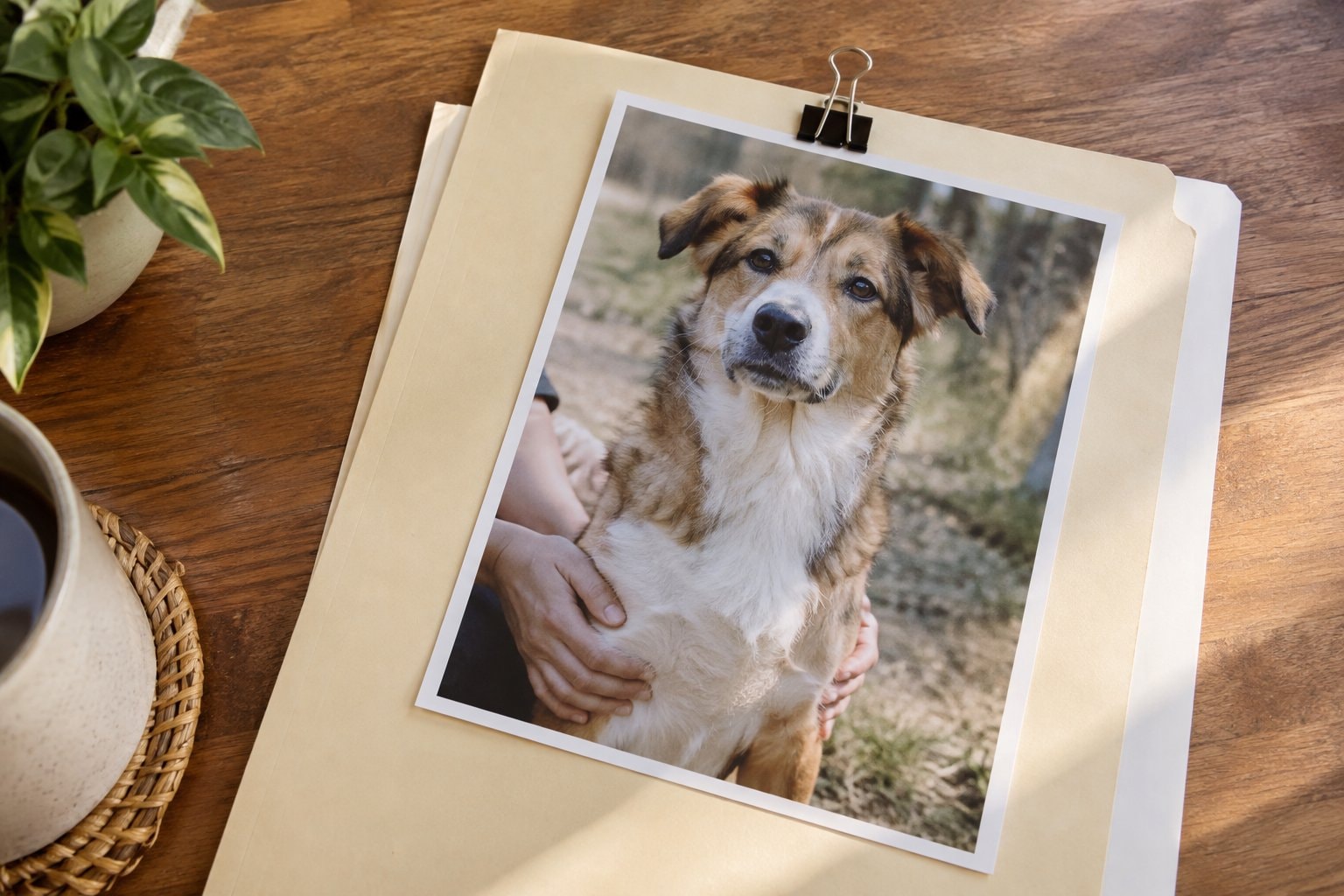
Include the people, as well as the pet
The American Red Cross recommends current photos of people with their pets in the emergency kit. Its guidance notes that many animals look alike, which can lead to confusion when a pet is lost. A picture taken together adds useful context alongside a written description, identification records and photographs of the animal itself.
A household picture does not have to be elaborate. Choose a clear image in which the person and animal are easy to recognise. Avoid a picture where the pet’s face is turned away or hidden by a hand, blanket or decoration. Keep useful images accessible rather than relying on remembering where a favourite photograph was saved.
Show what distinguishes the animal
A clear face view and a side view can help someone compare a found pet with your description. Include visible markings, coat pattern and features that can be seen without handling the animal. For birds or small pets, use a view that makes the animal itself clear rather than mostly showing bars, bedding or the enclosure.
- Choose sharp pictures in ordinary light.
- Keep the face and coat markings visible.
- Include a view that shows the animal’s general shape and colour.
- Keep a current household picture with the pet.
- Replace pictures that no longer resemble the animal.
These are practical choices for a household record, not a request for a public gallery. Keep the images with the other emergency information. A collar, a familiar carrier or a distinctive enclosure can be noted separately, since those objects may not remain with a pet that escapes. The animal’s own appearance matters in the description.
Make paper and phone copies usable
Put printed copies in a folder that stays with the pet supplies. Protect them from water and keep the printing clear enough to see the markings. Save the same useful images together on the phone so they can be found without searching through unrelated photographs. Make sure another trusted adult knows where the copies are kept.
A phone may be left behind, run out of power or be difficult to use during a move. Paper can be shown to someone without needing a screen. The phone copy can be shared when a worker asks for it. Neither format needs to replace the other. The pet emergency kit guide explains where the photo folder fits with the rest of the supplies.
Keep the identification record current
The Wikipedia reference on pet microchips explains that shelters, animal-control staff and veterinarians look for chips in found animals. Scanning reveals identifying information that can be checked through the registration record. A chip without current registration details is not a useful route to the person looking for the pet.
Keep the chip’s identifying record with the photographs. Check the registration after a move or a change in how the household can be reached. If displacement has made the usual details unusable, arrange an update through the registry. Ask the veterinarian about the animal’s existing chip record if it is unclear. This is separate from checking the collar tag.
Ready.gov’s pet preparedness guidance recommends keeping microchip details current and including an emergency contact outside the immediate area. It also advises planning with friends, relatives or neighbours who can care for or help evacuate pets when their usual person cannot. Make sure the trusted adult knows where identification records are kept.
Check collars and tags in the ordinary routine
The ASPCA’s general dog-care guidance includes identification attached to the collar. Check that a tag remains readable and its details are current. A photograph showing an old tag does not make the current tag usable. Keep collars, harnesses and leads appropriate to the animal’s ordinary care, and ask the veterinarian about identification choices for other kinds of pets.
Record whether the pet usually wears a collar and what it looks like. If the collar was lost or left inside during an emergency, tell the shelter or animal-control worker. Identification can come from different pieces of information. Do not rule out a found animal solely because it is no longer wearing the expected collar.
If a pet bolts after a fire or storm
During a fire, get everyone out and call 911. Never return inside to look for a pet. Tell firefighters when an animal is still missing and where it was last seen. Keep the pets already outside contained, away from the activity. The first-hours guide covers this part of the response before a missing-pet search is considered.
Ask the local animal shelter or animal control how to report a missing pet and check found-animal information. Give a clear description, the last known location and accessible photographs. Say whether the animal has a microchip and whether the registration details are current. Follow the local process rather than assuming that a photograph has reached everyone who needs it.
Have a trusted adult keep track of which information has been shared and where the pet was last reported. Distinguish a confirmed sighting from a possible resemblance. Update the people handling the report when the animal is found. A picture helps people compare information; it does not guarantee a match or replace the shelter’s identification checks.
Keep the record useful through changes
Refresh the folder when an animal’s appearance changes or a better clear picture becomes available. Check that printed and phone copies describe the same pet. Keep ordinary care records beside them for a temporary caregiver. The dogs in emergencies guide adds the leash, crate and handling questions that sit alongside photo preparation.
If a trusted adult also keeps a copy, make sure it is the current set rather than an older picture that happens to be easy to find. Use an arrangement the household understands. After a move, check both the picture folder and the identification records together. Having clear images ready is useful preparation, even if nobody ever needs to use them in a missing-pet report.